In the women I see in peri-menopause and post-menopause, one of the most common patterns isn’t immediately obvious.
It’s not just strength, flexibility, or fitness.
It’s breathing.
More specifically, how the breath changes under stress, hormonal transition, fatigue, or long-held tension patterns in the body.
And what’s interesting is that when we begin to work gently with breath and movement, many women notice shifts that go far beyond the Pilates mat.
Why breathing often changes in menopause
During peri and post menopause, hormonal shifts can influence many systems in the body, including:
- connective tissue elasticity
- sleep quality
- stress sensitivity
- temperature regulation
- energy and recovery capacity
- pelvic floor function
At the same time, life stress, long-term postural habits, and cumulative tension often mean many women are already breathing in a more shallow or held pattern before menopause even begins.
So when the nervous system becomes more sensitive during this transition, breathing patterns often shift further into:
- chest breathing
- shallow breathing
- breath holding when stressed
- holding in the tummy
- tightness through the ribcage and shoulders
None of this is “wrong” — but it can influence how supported and regulated we feel day to day.
The breath is a whole-body system
Breathing is not just about the lungs.
It involves a coordinated relationship between:
- diaphragm
- ribcage (including intercostals)
- thoracic spine
- abdominal wall
- deep stabilisers like the psoas and quadratus lumborum (QL)
- pelvic floor
When this system moves well together, breathing feels easier and the body often feels more organised and supported.
When parts of it become restricted — often through stress, posture, surgery, or habit — other areas tend to compensate.
This is where breath-led movement becomes important.
What we work with in Pilates
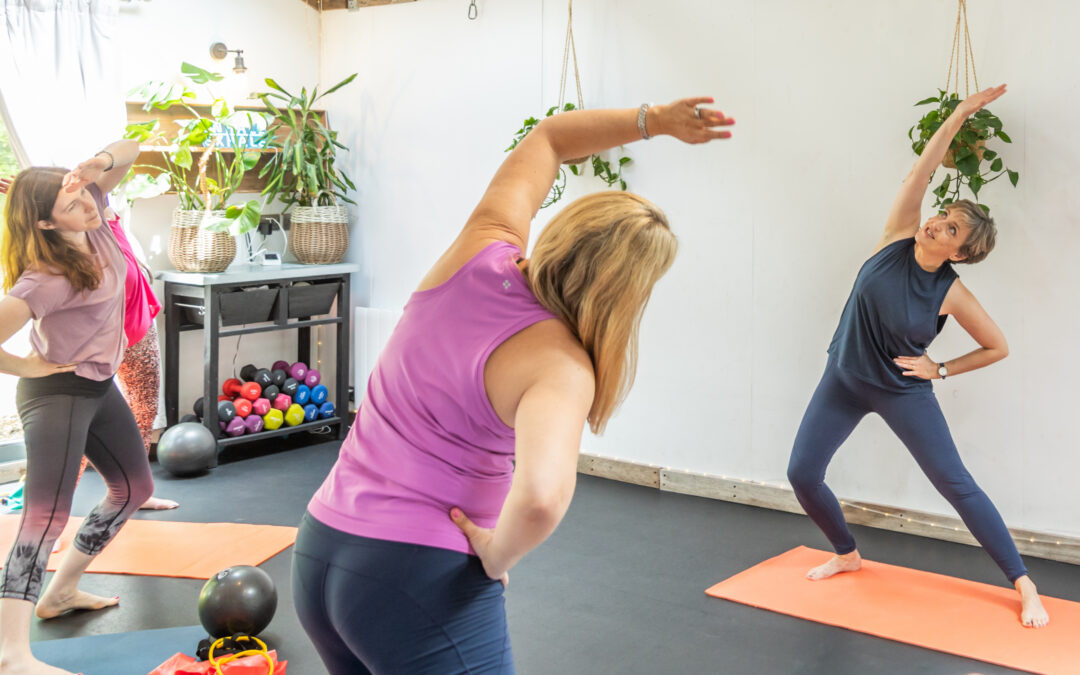
In the women’s classes I teach, we don’t treat breath as separate from movement.
We work with it directly through exercises that encourage:
- thoracic mobility (movement through the upper and mid spine)
- breathing out on the exertion to optimise intra abdominal pressure
- ‘letting go’ – of tension in the core muscles, before we start ‘engaging’
- ribcage expansion and release
- diaphragmatic movement and coordination
- intercostal engagement and flexibility
- softening and responsiveness in the abdominal wall
- awareness and release through QL and psoas
- pelvic floor coordination with breath
These are not isolated “muscle exercises” — they are ways of helping the whole system communicate more efficiently again, and we work on gradually retraining the body to co-ordinate breathe with movement so we can move through the world more freely and comfortably.
How better breathing can support menopause symptoms
When breathing becomes more efficient and coordinated, many women notice changes in areas that are often associated with menopause, including:
- anxiety or heightened stress sensitivity
- disrupted sleep
- fatigue or low energy
- tension in the jaw, neck, shoulders, or abdomen
- feelings of overwhelm or being “on edge”
- reduced core or pelvic floor connection
- lower back discomfort
Breath does not “cure” menopause symptoms, but it can support the nervous system in a way that helps the body feel more regulated and resourced while those changes are happening.
Why this matters for movement
One of the things I often notice is that when breath becomes more coordinated, movement changes quite quickly.
The body becomes:
- less braced
- more responsive
- more fluid through the spine and ribcage
- more supported through the core
- less reliant on compensation patterns
- stronger and more efficient in every day functional movements
And importantly, exercise starts to feel more sustainable, when perhaps it has previously felt like a slog.
A kinder way to approach menopause and movement
Menopause is often talked about in terms of decline or loss.
But what I see in our classes every day is women taking back control of their bodies.
Tuning into the wisdom they’ve built through life’s challenges: they are in fact the experts when it comes to their own bodies.
The body is changing — yes — but it is also highly adaptable.
Breath becomes one of the most accessible ways to support that adaptability.
Not by forcing change, but by creating more space for coordination, regulation, and ease.
if you’d like to know more about our classes, visit the ‘classes’ page