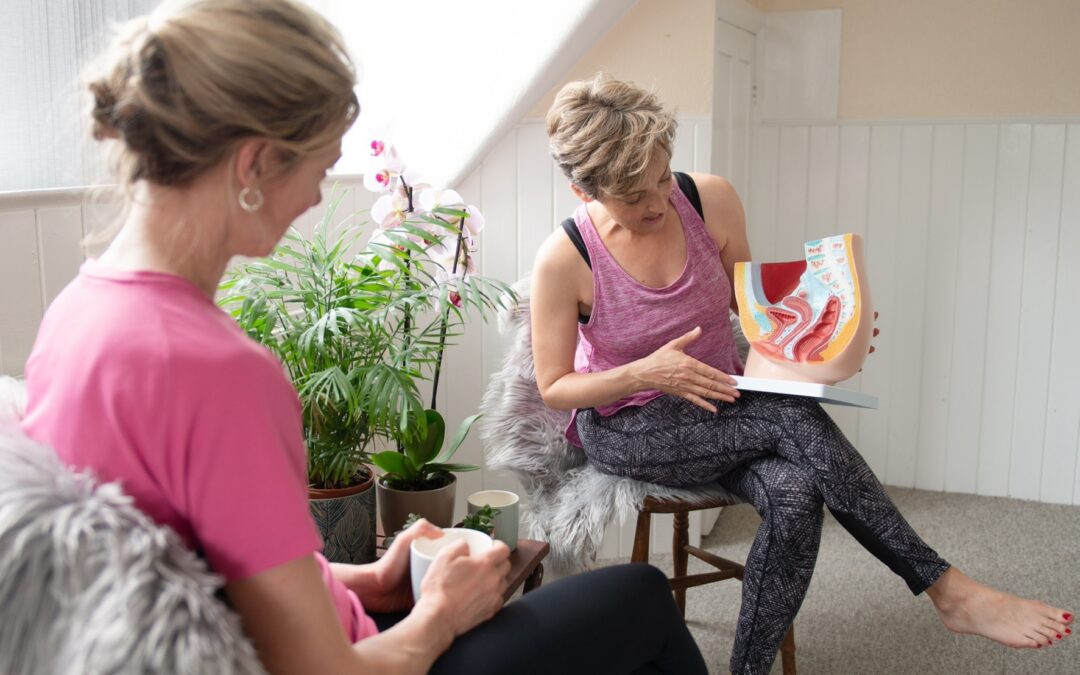
Many women are just told to “strengthen the pelvic floor,” but pelvic health is about far more than one group of muscles.
The pelvic floor works as part of a wonderfully connected system involving the diaphragm, abdominal wall, ribcage, spine, and breath.
Every time we breathe, pressure shifts through the body. Ideally, the diaphragm and pelvic floor respond together — creating support, adaptability, and ease in movement.
Stress, menopause, surgery, postural habits, pregnancy, abdominal tension, or simply years of rushing and holding ourselves together can all influence breathing patterns.
Over time, this may affect our:
- pelvic floor coordination – and continence
- core support
- posture and tension – presenting as back pain for example
- nervous system regulation
- how safe and supported the body feels
This is especially relevant during midlife and menopause, when hormonal and structural changes can alter the body’s relationship to stability, pressure, and recovery.
Often, the answer is not more gripping or holding.
It is learning how to create more space, movement, and responsiveness through the breath.
In breath-led Pilates and movement practices, we gently explore:
- ribcage mobility
- diaphragmatic breathing
- pressure management
- nervous system regulation
- whole-body coordination
The goal is not “perfect breathing.”
It is more functional, adaptable breathing that helps the body feel supported from the inside out.
Pelvic health is not just about strength.
It is about connection, regulation, and how the whole system works together.
If you’d like to explore breath-led movement in a supportive, nervous-system-aware environment, Kindred Movement Pilates classes are designed to help you feel stronger, more connected, and more at ease in your body.